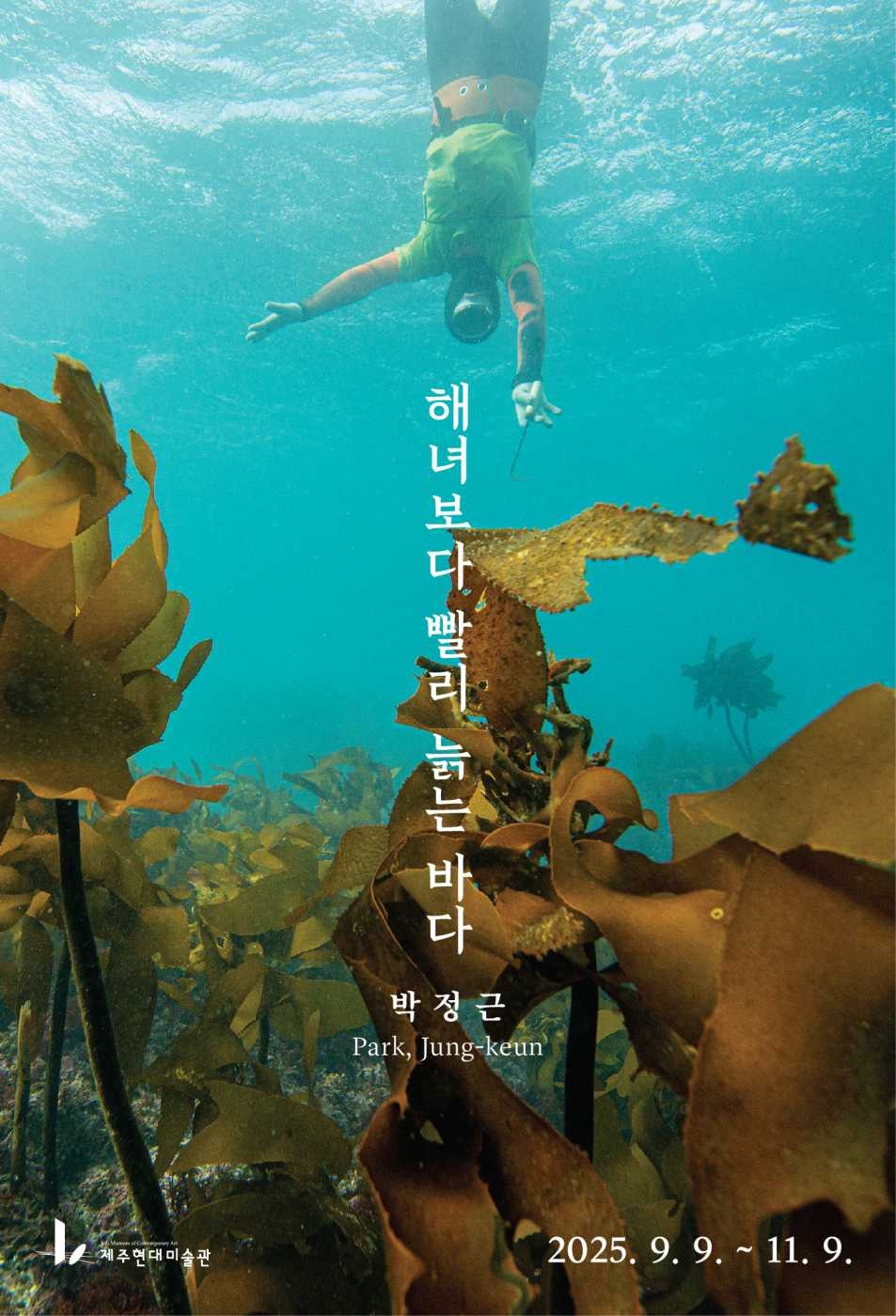
| Period| | 2025-09-09 - 2025-11-09 |
|---|---|
| Operating hours| | 09:00~18:00 |
| Space| | Jeju Museum of Contemporary Art |
| Address| | 35, Jeoji 14-gil, Hangyeong-myeon, Jeju-si, Jeju-do, Republic of Korea |
| Closed| | Mon |
| Price| | Free |
| Phone| | 064-710-7801 |
| Web site| | 홈페이지 바로가기 |
| Artist| |
박정근
|
정보수정요청


|
|
Exhibition Information
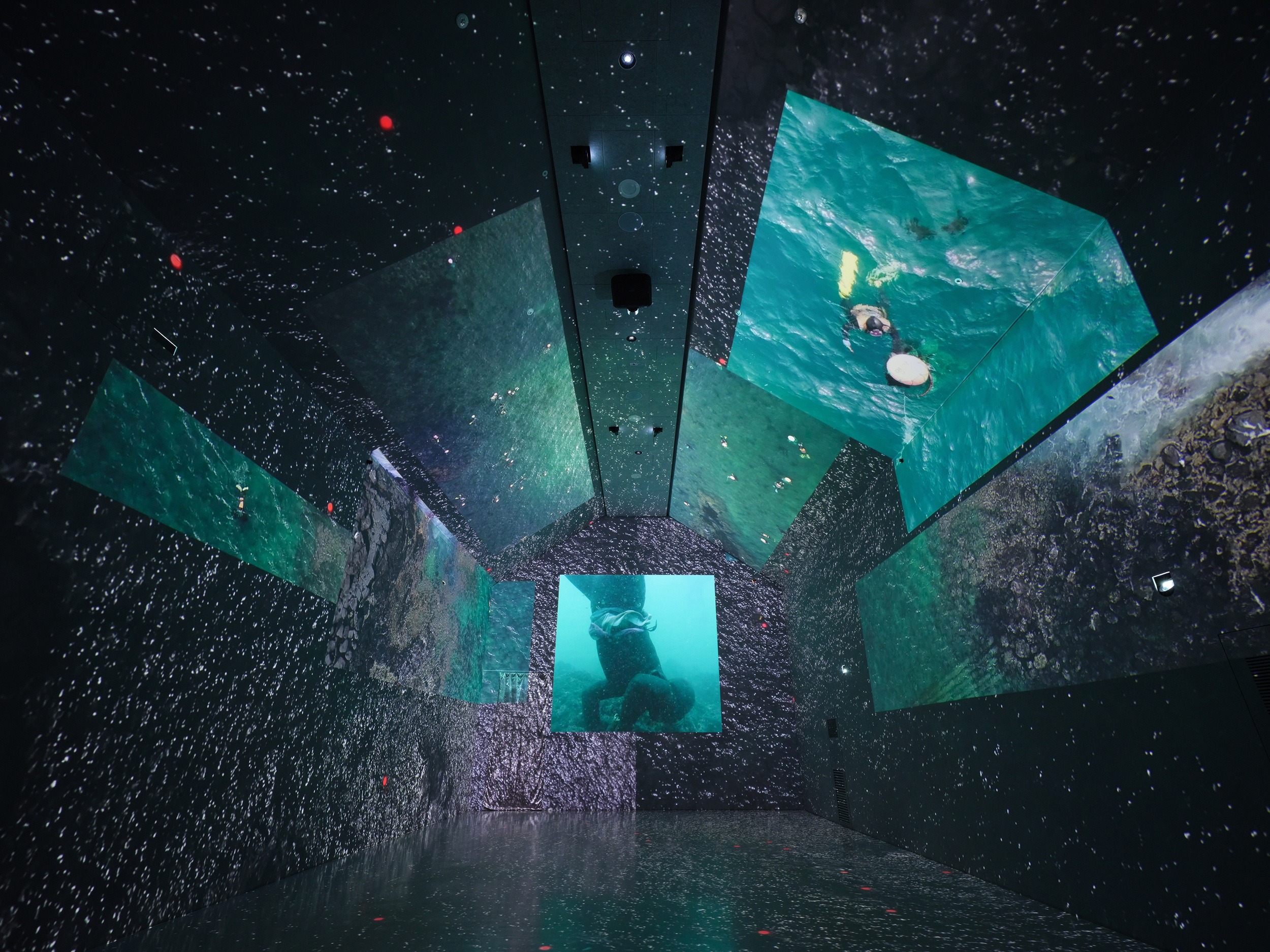
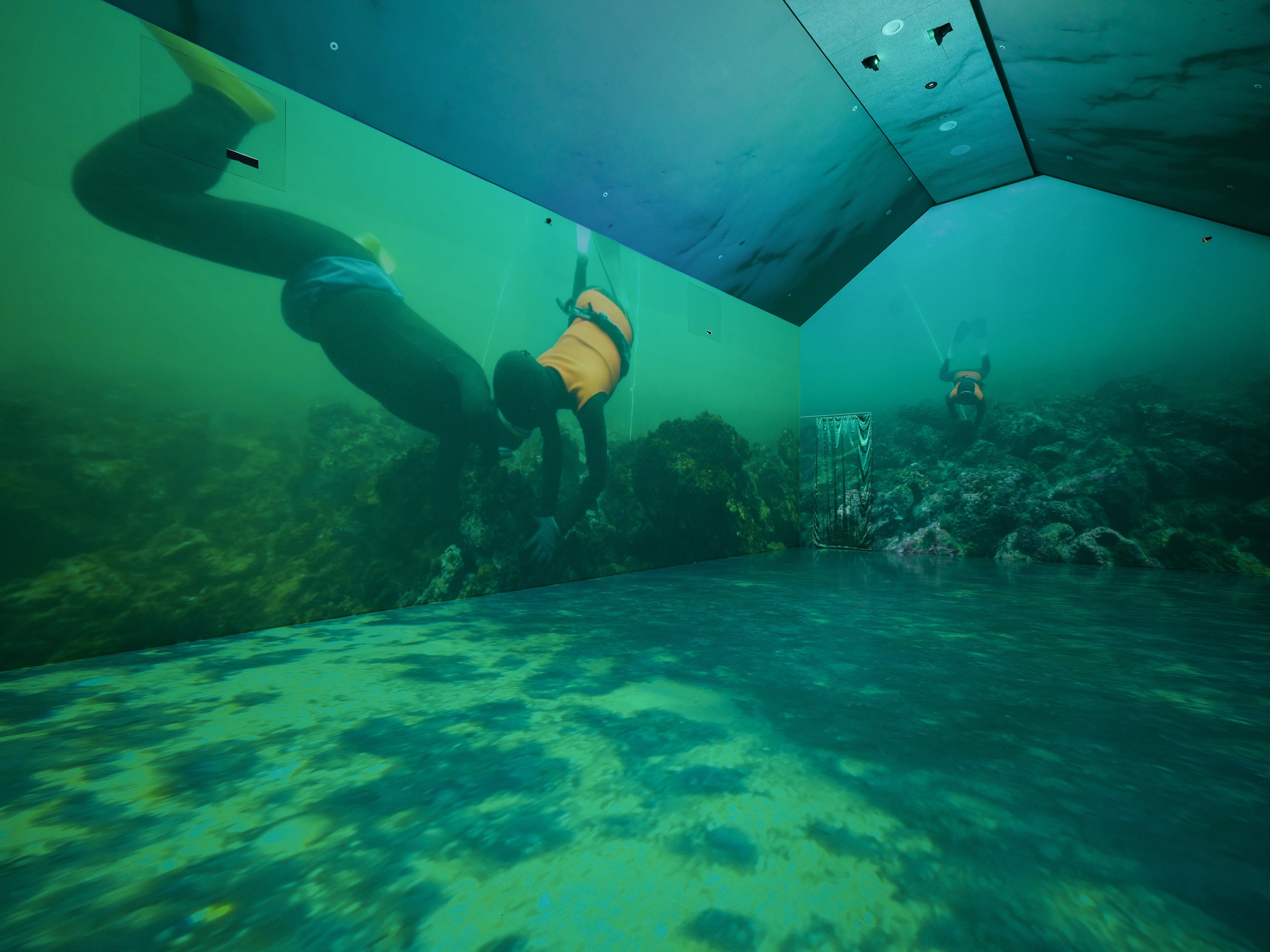
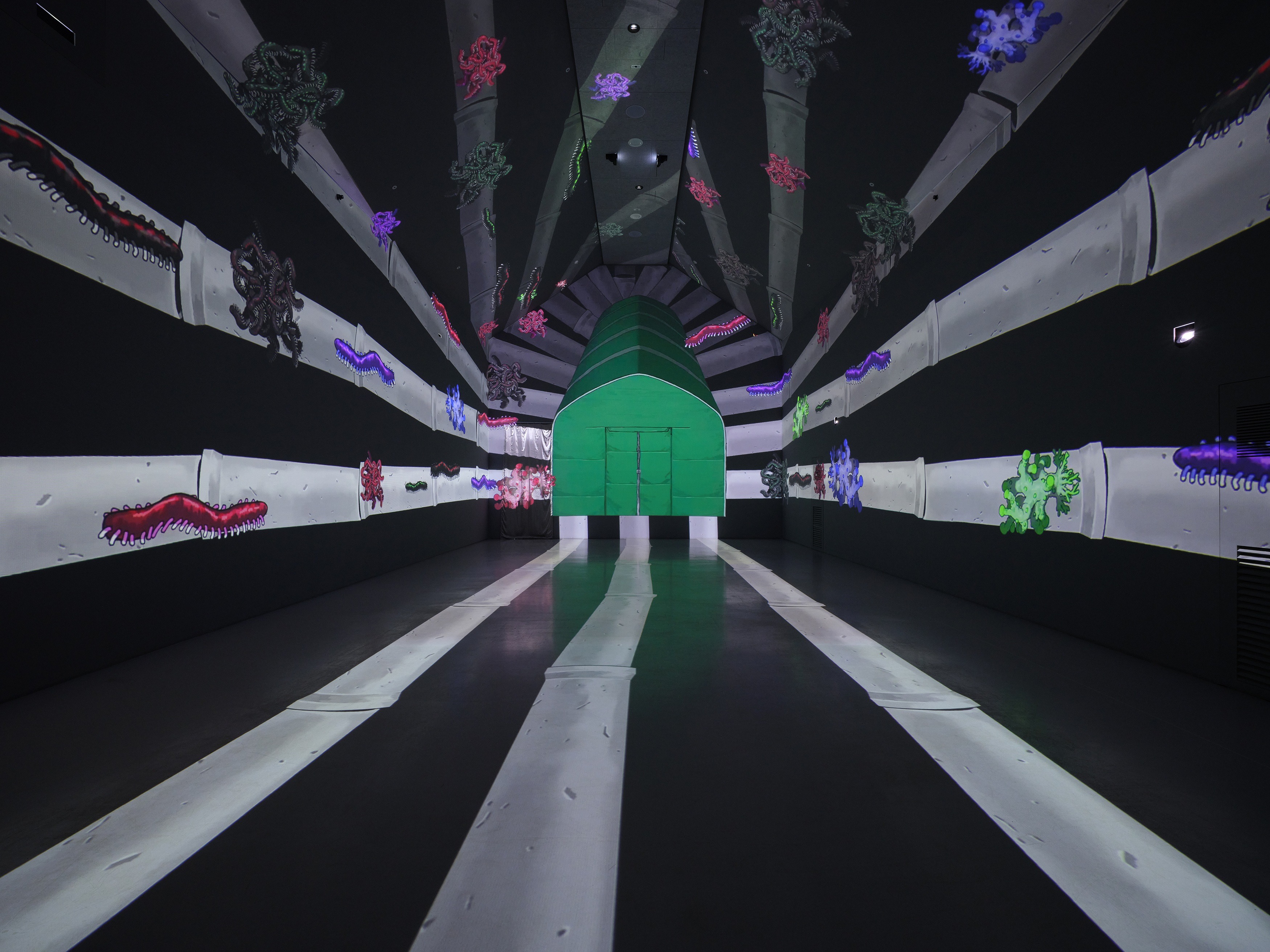
			“Samchun (Samchun is a local term for addressing elders, used with respect and affection.), how long will you keep diving?”
“I’d go on forever if I could. But the sea is ageing faster than I am. I thought with fewer haenyeo, there would be more to catch in the sea. But the sea is ageing just as much as the world is advancing.”

These were the words of Samchun Myung-ja, the youngest sanggun haenyeo (Sanggun haenyeo: the most skilled women divers, capable of diving deepest and holding breath the longest.) of Onpyeong Village in 2020.
That one remark marked the beginning of Seas Ageing Faster Than Haenyeo, a project that led me—who had previously focused on portrait-style documentary photography such as Haenyeo, First Settlers, and Portraits of 4·3—into the unexpected realm of the climate crisis.

After hearing Samchun’s words, I plunged back into the sea. What the lens captured... was bleached. The seaweed that once filled the frame was gone, as were the marine creatures that should have been darting among them. Only the whitish crust of calcareous algae covering the rocks and a few scattered sea urchins were all I could see. What on earth had happened?

The loss of seaweed is not merely an ecological shift; it signifies the rupture of wisdom and knowledge accumulated across generations. It is a fundamental crisis for the unique worldview of Jeju. The death of the sea witnessed by the haenyeo of Onpyeong is evidence that the global climate crisis manifests differently—and unequally—in each region. Natural rhythms once thought predictable are now filled with confusion and uncertainty, and the haenyeo’s vivid accounts reveal the reality of this crisis more clearly than abstract environmental statistics ever could.

The irony is that just as haenyeo culture has been inscribed on UNESCO’s Intangible Cultural Heritage list and discussions on preservation are flourishing, the very marine ecosystem on which the haenyeo depend is undergoing rapid change. In the present moment, when we cannot foresee what kind of world lies ahead, what we need is perhaps not more technology or grand discourse, but humility—seeking new ways of coexistence between sea and land, humans and nonhuman life, each from our own place. Finding how to live together in this turbulent age may be our task. I will continue to carry my camera to capture the time of the sea, recording the traces of what is disappearing and the stories of what remains. I hope that these small testimonies, when gathered, might illuminate a path back toward the balance we have lost.


 Naver
Facebook
Kakao story
URL 복사
Naver
Facebook
Kakao story
URL 복사


