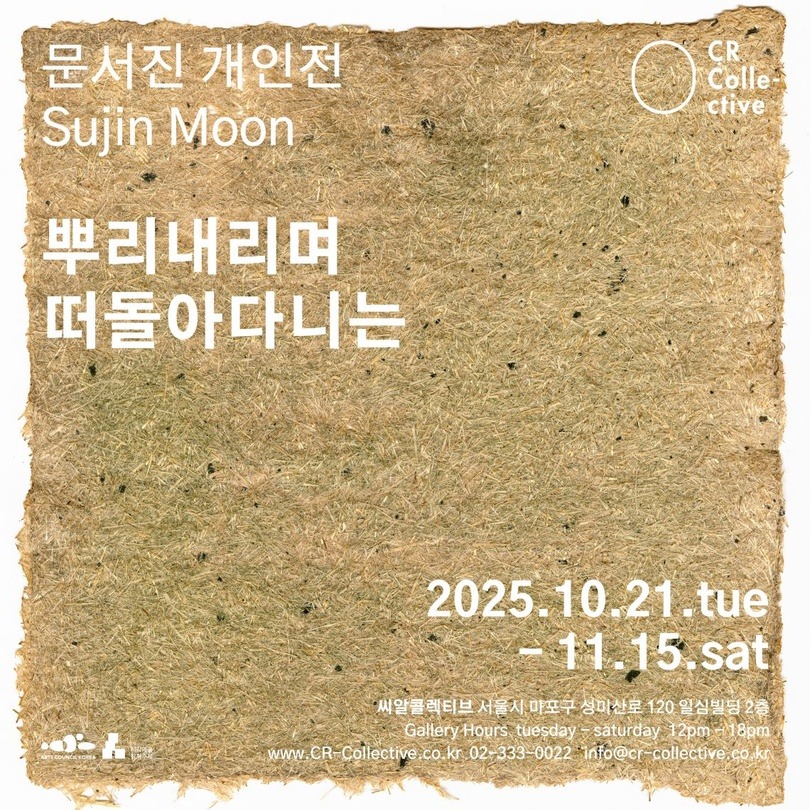
| Period| | 2025-10-21 - 2025-11-15 |
|---|---|
| Operating hours| | 12:00~18:00 |
| Space| | CR Collective |
| Address| | 120, Seongmisan-ro, Mapo-gu, Seoul, Republic of Korea |
| Closed| | Sun,Mon |
| Price| | Free |
| Phone| | 070-4006-0022 |
| Web site| | 홈페이지 바로가기 |
| Artist| |
문서진
|
정보수정요청


|
|
Exhibition Information
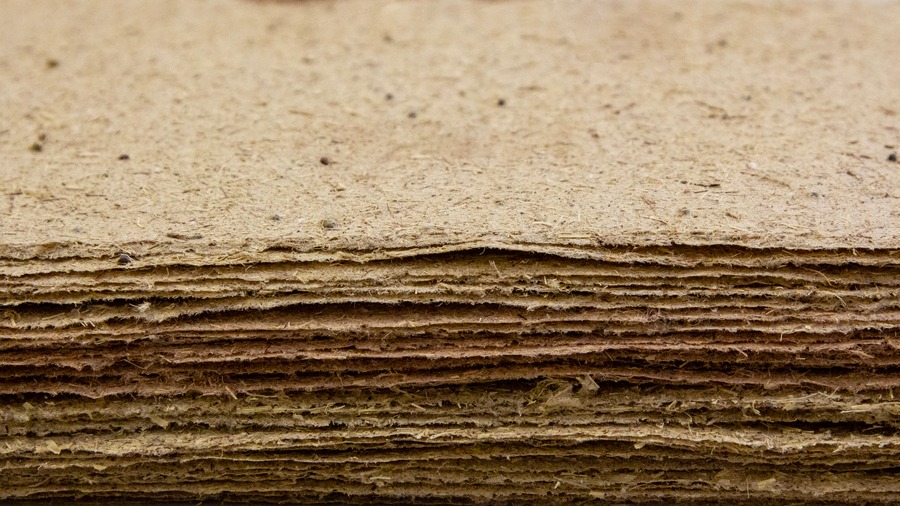
			Moon Sujin, selected for the 2025 CR Open Call for Emerging Aritsts, has documented rhythms where extinction and regeneration intersect through the labor of tending a garden and bodily experiences, articulating a language of life’s cyclical nature. The repetitive experience of plowing fields, planting seeds, and harvesting yields becomes a foundation that transcends personal narrative to explore the circulation of ecosystems and the ways humans are positioned within them. This exhibition, Driftroot, unfolds ecological scenes in which humans and nature, death and life mediate one another within the material structure where paper, seeds, and the lives of plants intertwine.

In Moon Sujin’s work, paper is not merely a recording medium but an ecological apparatus. Paper made from pulverized hay is simultaneously the final remnant of dead plants and an empty margin, becoming a condition that nurtures others by germinating seeds once again. Moon’s paper does not reject or conceal the remnants of death and extinction; rather, it reveals that these very remnants serve as mediators of transformation that enable new life. Here, paper operates not as a simple “product” but as a phase in the circulation of life where death and regeneration, settlement and movement intersect, and as an apparatus that reveals relational difference. Single Sheets presents papers made from hay gathered at locations where Moon stayed from 2021 to 2025, offered as margins that hold specific times and places while awaiting new stories. Moon’s contemplation—”if paper is a joint in time that divides beginning and end”—reveals ecological temporality by conceiving of paper not as a mere surface but as a knot of life, a unit of moments. Ecological time is not linear progress but is composed of countless units that divide death and life, forming knots. Paper ultimately serves as an apparatus that materially visualizes these knots, prompting us to question anew how humans are positioned within them.

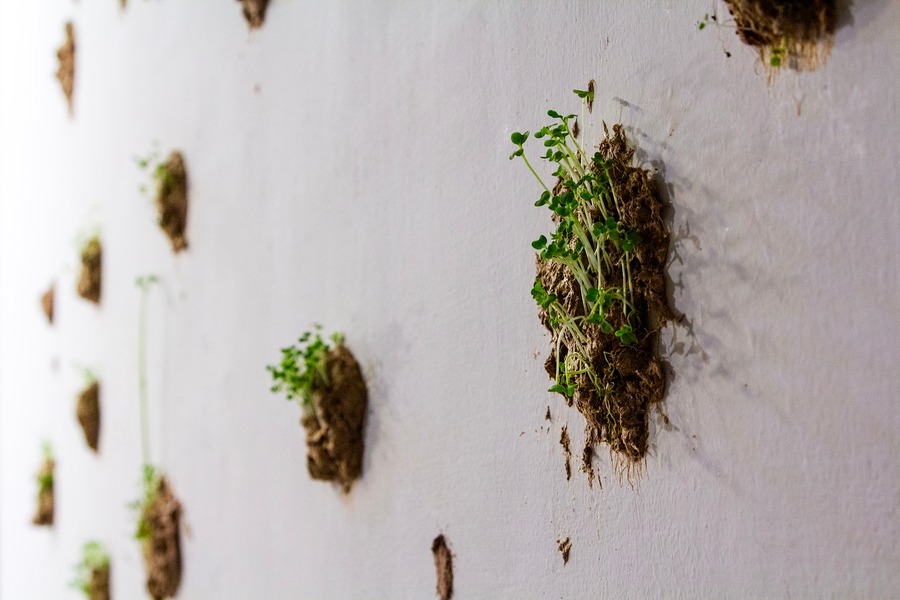
The Cast begins with the act of throwing seed-embedded paper onto the exhibition wall, where over time the seeds on the paper sprout. This work demonstrates that life does not exist as an isolated entity but is formed through entanglement with water, light, surfaces, and environment. Here, paper and seeds presuppose one another, entangled with walls, water, and time to generate new life. In other words, life is not an isolated subject but exists only within making-with. The Standing I, II captures the process in which upright paper collapses under rain and dew, and new plants emerge from that very spot. The body of dead plants stands as paper, and life springs forth from where it has fallen. Paper stands at the boundary between death and life, simultaneously revealing the tensions of vertical and horizontal, ascent and descent. However, in this scene, death appears not as mere extinction but rather as a scene of alterity in which the dead sustain the living. Collapsed paper exhausts itself to raise the life of the other, and in this process, death is transformed not into an end but into a condition for the other. Moon Sujin’s work thus demonstrates that death and life do not simply oppose one another but appear as mutual transformations within a single relational field.

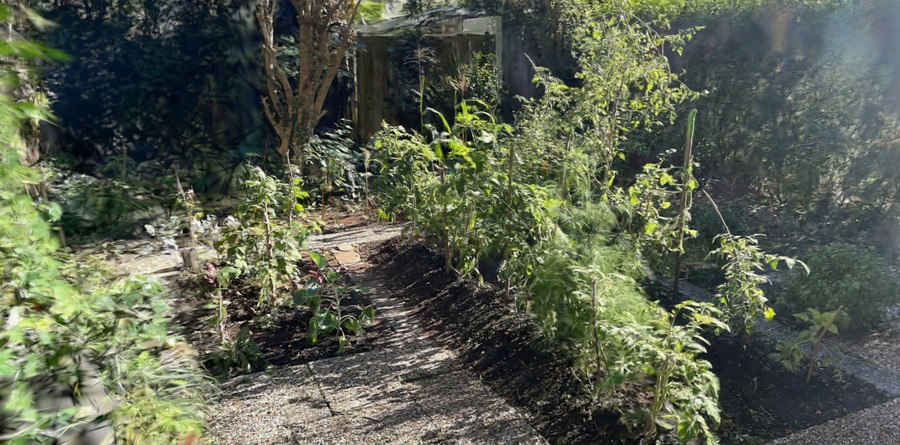
In the Garden extends this ecological thinking into digital space. This new interactive touchscreen work, created through 3D scanning of the backyard garden in Maastricht, invites viewers into a virtual garden where they grope across the screen while hearing tactile sounds and recited poetry. Indistinct sounds murmur, and as one approaches certain points, voices resonate more clearly, transforming the act of tending a garden into a process of tactile understanding acquired through bodily senses. This work explores tactility through the immaterial forms of 3D scanning and voice, demonstrating that ecological experience does not remain confined to analog corporeality but can be newly generated through the entanglement of relationships and senses within digital technology. Ecology is now not a binary structure of “nature” and “human” but a field of sympoiesis collaboratively woven by technological media, human senses, and nonhuman beings.

Finally, the new work Driftroot is a performance video documenting a scene in which paragliding performers (actual twin sisters) scatter handmade paper from the sky. The paper flutters in the air, touches the ground and disappears, and days later seeds sprout from that spot. This scene evokes the carnivalesque circulation that breaks down the death-regeneration boundary as described by Bakhtin, yet the experience here does not remain in the sublime of humanity rendered powerless before nature’s overwhelming force. Rather, it approaches as a scene of relational coexistence in which humans and nature form connections through their mutual difference. Humans and nature do not dominate or assimilate one another but become entangled through their differences, living-with. The scattering of thrown paper and the sprouting of seeds is not absorption into nature but becomes the act of breathing together within the rhythm of the ecosystem. The flight of paragliding reveals this field of relational life, summoning a momentary catharsis in which humans and nature reflect one another.

As the title suggests, the exhibition demonstrates the dynamism of existence that simultaneously takes root and scatters. It presents to viewers that seeds and fruits are not separate but one process, that difference is not an isolated entity but is generated within relationships. Moon asks: where do we take root while drifting, and in what ways does life that springs from the place of death illuminate our lives? This exhibition, Driftroot, unfolds these questions as a visual and material landscape, reminding us that all, like paper, are part of the ecosystem, ceaselessly disappearing and being reborn.


 Naver
Facebook
Kakao story
URL 복사
Naver
Facebook
Kakao story
URL 복사


