| Period| | 2026-03-12 - 2026-04-18 |
|---|---|
| Operating hours| | 10:00-19:00 |
| Space| | Gallery2/Seoul |
| Address| | 204, Pyeongchang-gil, Jongno-gu, Seoul, Republic of Korea |
| Closed| | Sun,Mon |
| Price| | Free |
| Phone| | 02-3448-2112 |
| Web site| | 홈페이지 바로가기 |
| Artist| |
|
정보수정요청


|
|
Exhibition Information
			Son Donghyun has persistently sought to expand the boundaries of Korean traditional painting by bringing the signs of contemporary visual culture into traditional painting styles. This solo exhibition, Hep, cuts across his past methodological tendencies to attempt a flexible transition of form and medium. Breaking away from the schema of completeness or consistency, he executes sudden calls akin to a jazz musician’s vocal interjection, intervening in the existing melody to drive rhythmic variation. Son borrows order and meaning from tradition: the display format of the dabogyeok (a traditional compartmented curio-cabinet for prized objects), the symbolism of the sipjangsaeng (the Ten Symbols of Longevity), and the peripherality of clouds. What occupies their interior, however, are objects, signs, and fragments captured from the artist's surroundings. Here, classical form operates as a typified frame, and by acquiring its archetypal quality, it clashes the heterogeneous and synchronic elements within against established orders of the past. This is a strategy that moves beyond a simple juxtaposition of tradition and popular culture, transplanting the structure of traditional painting onto today’s materials and propelling its origins and contexts into variations of form and medium.


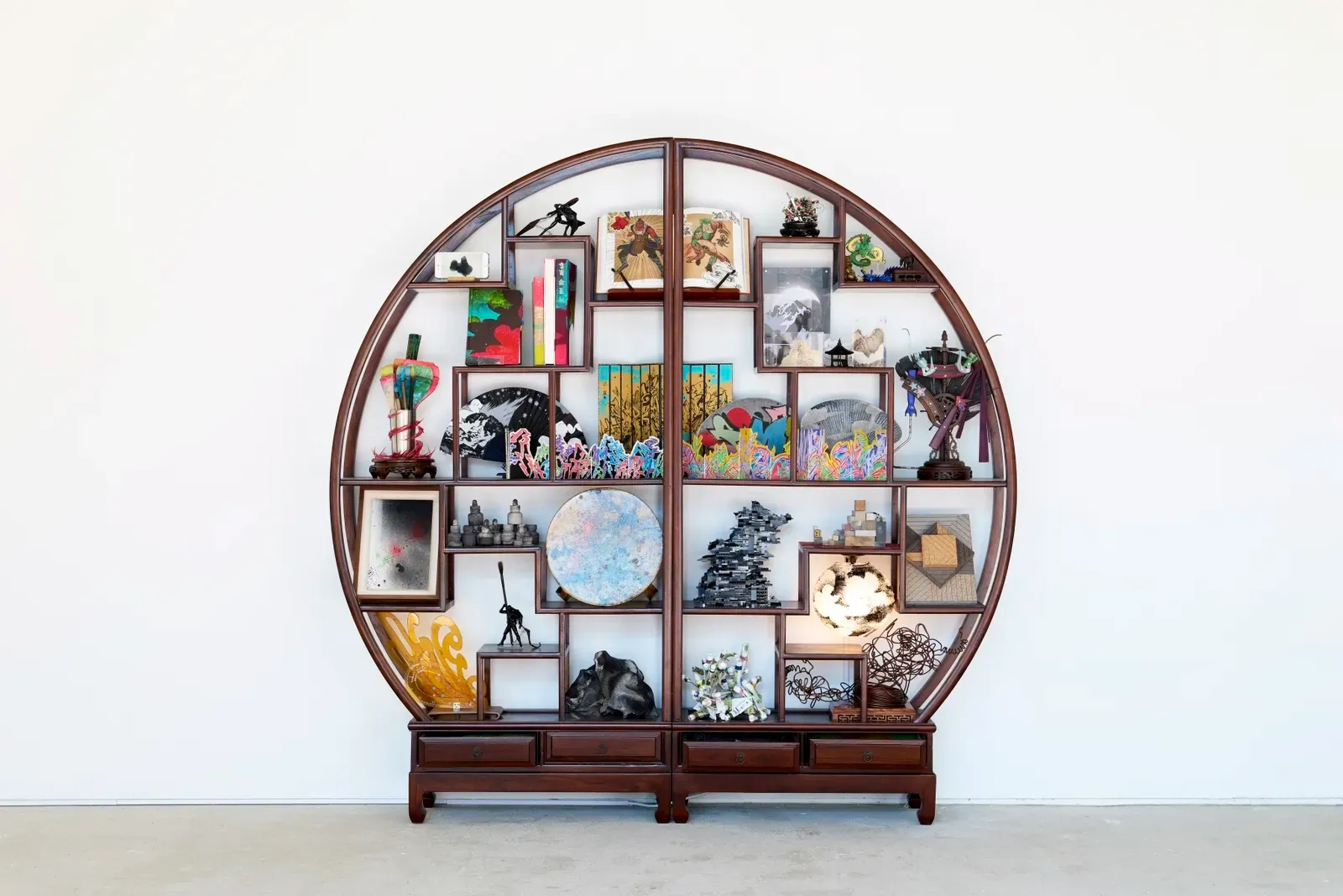
Full Moon (2025-2026) is the pivotal axis of how this strategy is visualized. The dabogyeok, originally a display format for the ostentation of authority, undergoes a qualitative shift as it is occupied by objects and traces discharged from Son Donghyun’s studio: hardened globs of paint, old tools, interlocking plastic bricks, spray bottles, and books that will never be opened again. These fragments of various origins and functions, positioned on the shelved frame of the display cabinet, gather in allusion to specific forms. Lumps of paint mimic the gestural dynamism of figures or gwaeseok (fantastically shaped scholar’s rocks), while interlocking bricks construct silhouettes reminiscent of the gibong (fantastic peaks) of the sansuhwa landscape painting tradition, or even yeongmul (mythical creatures). Rather than directly reproducing specific objects with obvious clarity, the items evoke form through entanglement, floating between inherent materiality and implied form, never arriving at the substance of either. In particular, the stop-motion video on an iPhone placed amidst this static arrangement, in which clay shifts shape under an unseen hand, amplifies the energy of these variable forms. As the artist assigns each object a new and individual context distinct from its original, the dabogyeok becomes a vehicle that mediates past forms to construct a provisional order composed of the present.


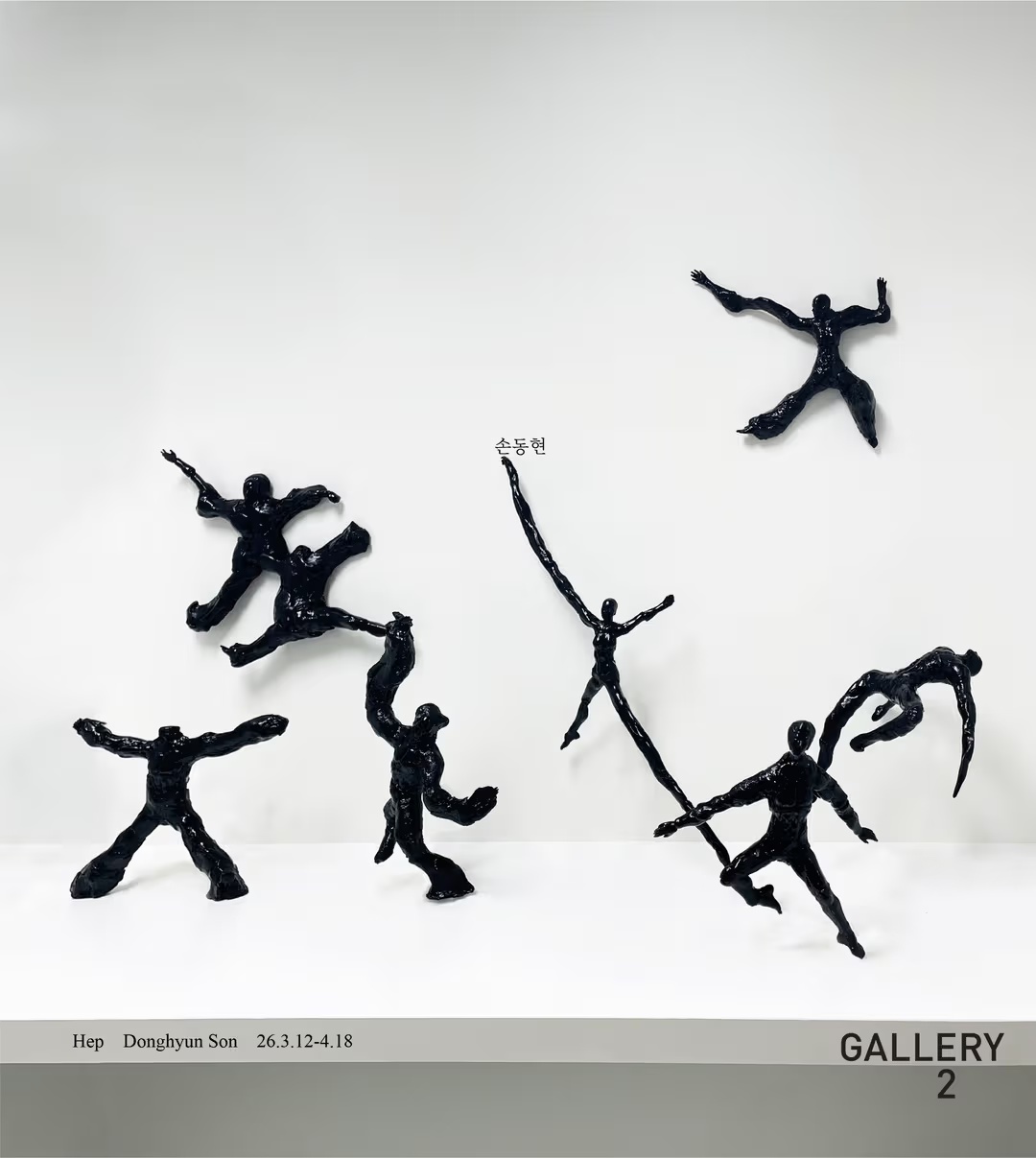
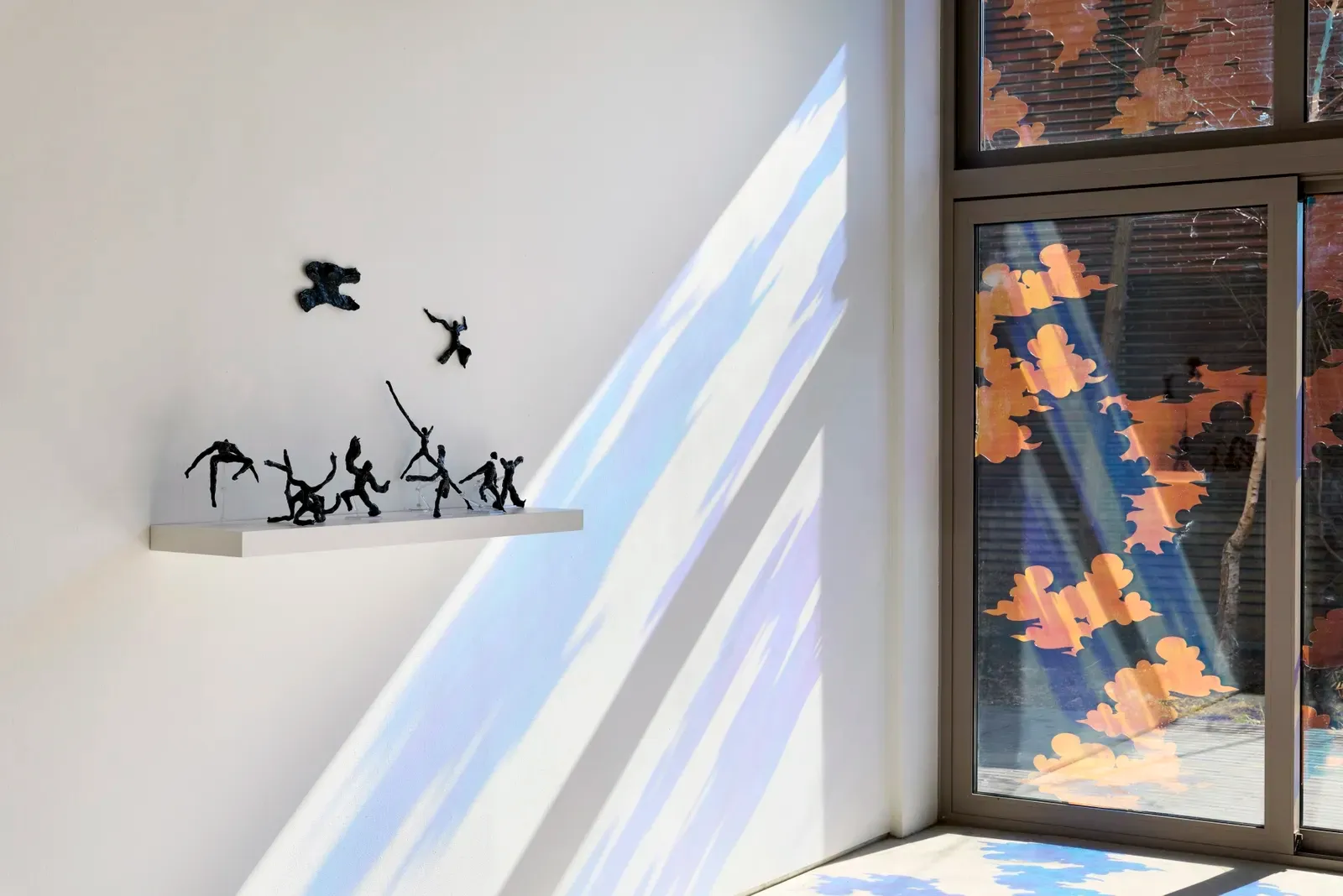
Crane (2025) and Dancer (2025-2026) shift this variability of form into the dimensions of symbol and embodiment. On paper that has been folded and unfolded, the sipjangsaeng crane shifts between flatness and three-dimensionality, its form altered by the creased surface. Depending further on the placement of the nakgwan (the artist’s seal and signature), its top, bottom, left, and right may be inverted. Through this, the crane is liberated from the rigid sign of longevity and substituted into a form possessing the freedom to distort direction and arrangement. Meanwhile, the black-ink figure iconography extracted from the works of modern and contemporary Korean masters such as Lee Ungno and Seo Se-ok is summoned as a group of figures evoking subculture. With intentionally skewed proportions and thick masses, these crowds forcefully anchor the unrealistic gestural dynamics of the painted figures into the physical constraints of three dimensions. Where the objects in Full Moon coalesced toward structured forms and arrangements, the crane and the crowd deconstruct established rigid iconography to gain new coordinates of medium. This is a method of subversion that sidesteps the matter of accurate representation to displace conventional forms into the space of here and now.


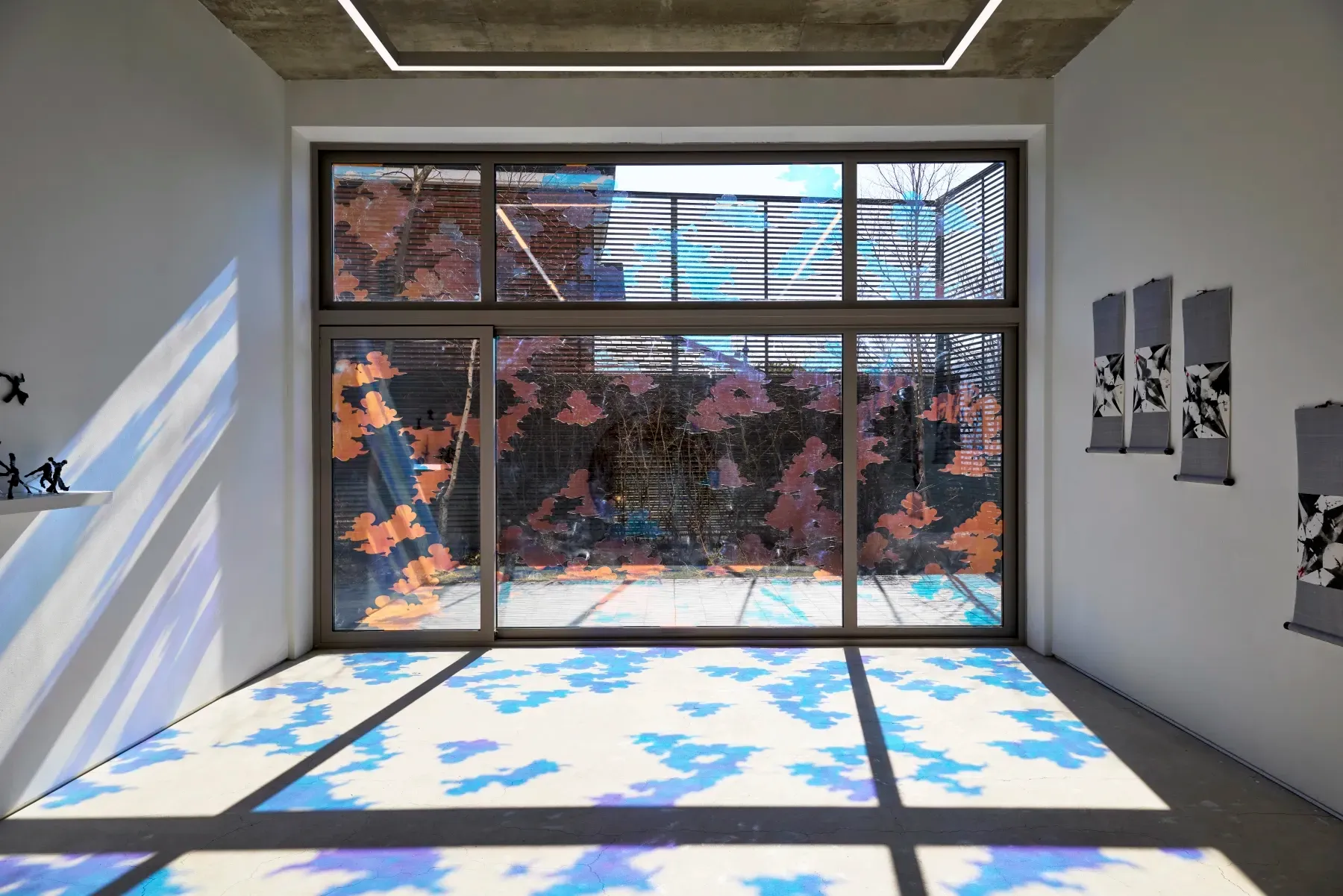
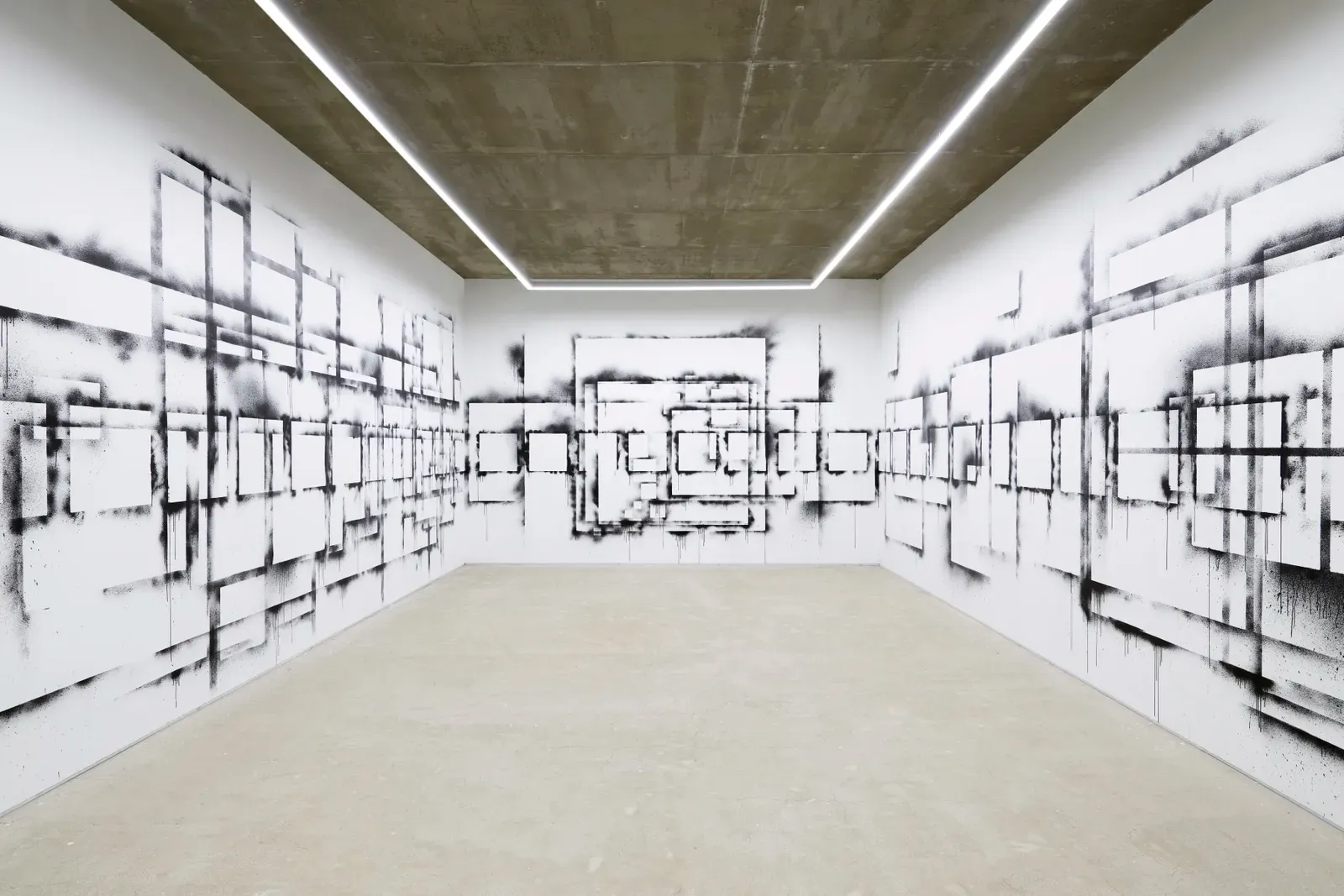
Cloud (2026), attached to the glass panels of the outward-facing windows, resets the relationship between the exterior landscape and interior form. The flat clouds cut from vinyl sheets are neither depictions of nature, elements of traditional painting, nor the visual language of animation. They are conceptual afterimages extracted and simplified from various reference points, overlapping with the outside scenery upon the medium of the glass. While the scene beyond changes with season and weather, the cloud overlay remains constant, elevating the status of an icon that had lingered in the periphery to the center of the scene’s composition. This approach reaches its apex in Story (2026), which sprawls onto the walls of the exhibition space. Son superimposed the outlines of numerous artworks that have hung on the walls of Gallery2 over the past several years and sprayed their contours with meok (East Asian ink). By summoning the physical traces of past occupancies in a specific space as intangible afterimages, the walls are reconstituted from sterile background into a mediating surface that condenses and presentifies accumulated narratives.


Ultimately, Hep is a practice of stationing drifting fragments at specific coordinates, exploring new possibilities in the relationships they form, and investigating an autonomy that dismantles the rigidity of form and medium. Here, the discontinuous signals that cross the exhibition like the exclamatory shout “Hep!” intentionally withhold referential meaning and momentarily evoke an improvised rhythm. Consequently, the objects and forms placed in Hep do not adhere to fixed definitions but become a hap (合)—a synthesis—that calls out a brief hep, setting in motion a momentary, open-ended state.


 Naver
Facebook
Kakao story
URL 복사
Naver
Facebook
Kakao story
URL 복사


