
| Period| | 2019-10-02 - 2019-10-31 |
|---|---|
| Operating hours| | 10:00 - 18:30 |
| Space| | Label Gallery/Seoul |
| Address| | 31, Seongsui-ro 26-gil, Seongdong-gu, Seoul, Republic of Korea |
| Closed| | Sunday, Monday, Holidays |
| Price| | Free |
| Phone| | 02-2272-0662 |
| Web site| | 홈페이지 바로가기 |
| Artist| |
|
정보수정요청


|
|
Exhibition Information
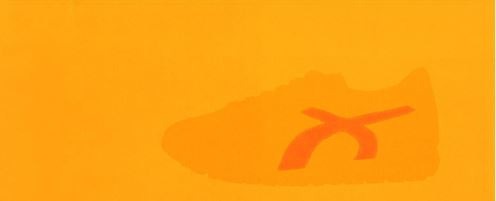
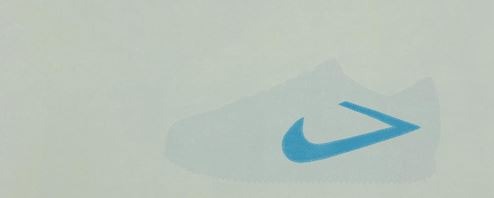
			Hahm Chang Hyun – Sneaker Brands from Our Memories and Their Signs
Every sign has some sort of meaning and takes hold of the reality of a capitalistic society in place of substance. Signs have now become the faces of everything. That is to say, abstract signs have become more influential than the real things they represent. They are truthful, veritable objects: money is a typical example. Every object in our surroundings demonstrates its own value through signs.

We consume something not to make use of its practical value but to possess its aura which springs forth from its logo. It is an uncaught, awfully equivocal, and ambiguous abstract painting. It seizes control of people's nerves, senses, and bodies with an overwhelming strength and power and aesthetic potential even though it is nothing more than an insubstantial emblem. Specific signs radically flow through the cycles of fashion and preferences, and new signs are rapidly consumed and continuously replaced with others in a capitalistic society. By then, this system has already begun to work. Such signs, however, are strong.  Hahm Chang Hyun's work features a single sneaker in woodcut. His neatly arranged scenes featuring a few limited colors demonstrate the side view of a sneaker whose silhouette resembles a still life. It looks like a poster meant to advertise a specific sneaker brand. Preserved in silence, the scene displays a sneaker finished in monochrome and a symbol referring to a specific sneaker brand that is vividly yet quite bleakly and simply situated. Such symbols are both familiar and unfamiliar. We have seen them somewhere before but they are from brands that are rarely found in our surroundings these days. Aren't they the sneakers worn by the characters in Reply 1988, a recent hit television series? Yes, they are from brands such as Caballo, Tiger, and Pegasus. These sneakers were produced by Samhwa and Taehwa in the 1980s and can now be found in our memories.
Even though attractive Nike trainers were introduced to Korea at the time, very few students could afford to wear them. Instead, they consumed domestically produced trainers that looked like copies of foreign sneakers. Caballo's logo was similar to that of Asics, Tiger to that of Adidas, and Pegasus to that of Nike. Despite this, they unveiled their logos without shame. Even though they were recognized for their high cost-effectiveness and beautiful designs, people who wore shoes by brands like Caballo, Tiger, and Pegasus perhaps felt an ever greater sense of deprivation and pathos brought on by the gap between the rich and the poor.

With the advent of Nike, Korean society began to learn what it means to have taste in a capitalistic society. A ranking system was applied to different tastes: Prospecs was second to Nike while Tiger, Caballo, and Pegasus followed Prospecs. Nice was ranked the lowest of all. At that time some students would even draw the Nike logo on their sneakers themselves.
Hahm Chang Hyun depicts the logos and symbols of domestically produced sneakers that can no longer be found in our surroundings in a serene fashion. They appear neither clear nor vague. Harking back to the sneaker brands from our memories, we ask what the signs covering the skin of things in society are. Signs are strong!
Park Young-taik


 Naver
Facebook
Kakao story
URL 복사
Naver
Facebook
Kakao story
URL 복사


